

What to Eat in Japan With Kids: A Family Food Adventure
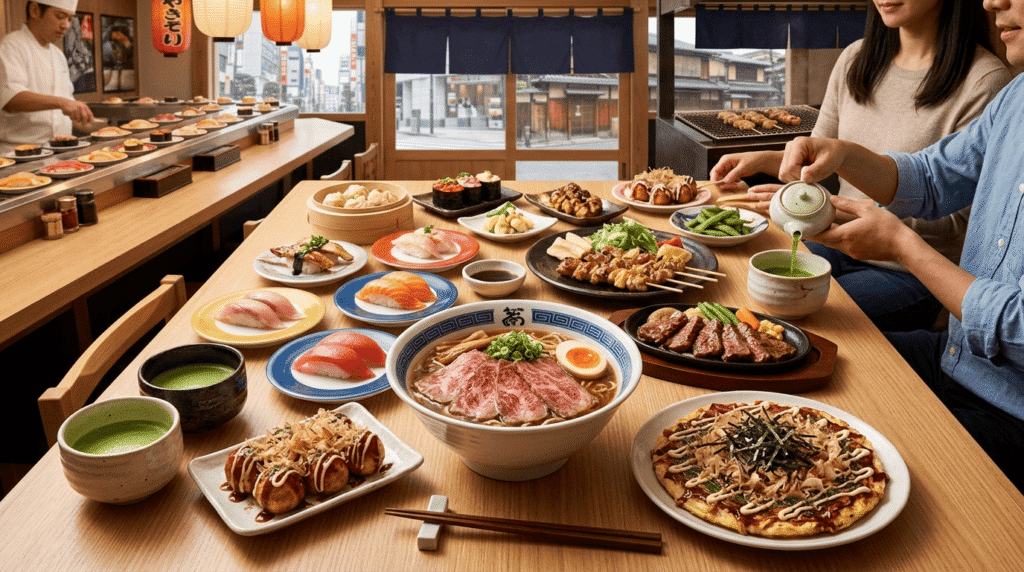
Planning a trip to Japan with kids and wondering what they will actually eat? Traveling with children can make food one of the most exciting, and sometimes challenging, parts of the experience.
Our family took that question with us to Japan, where our six- and nine-year-old kids tried everything from ramen and Wagyu beef to conveyor belt sushi, Japanese pizza, matcha, street food, and traditional Kyoto treats.
Some foods were instant favorites. Others were a little too adventurous or simply had flavors the kids weren’t used to. But that’s what made the trip so much fun.
From Tokyo’s food scene to Kyoto’s traditional tea shops, here are some of the memorable foods and restaurants we experienced as a family.
Wagyu Ramen Goku in Shibuya
Our Japan food adventure started with something that sounds simple but turned out to be anything but ordinary, Wagyu ramen.
At Wagyu Ramen Goku in Shibuya, the ramen is built around beef. The broth is made entirely from beef bones rather than the more familiar chicken or pork base.
The restaurant also incorporates different beef oils into the broth, creating a rich, layered flavor. The result is a thick, intensely beefy soup that feels very different from the ramen many people are familiar with.
The toppings take the Wagyu theme even further, with several cuts of beef prepared in different ways.
There are sirloin slices grilled until tender, smoky thigh meat, and soy-marinated beef with a deeper flavor. The noodles are also made using premium wheat flour and have a satisfying chewy texture that holds up well against the rich broth.
For anyone who loves beef, this was definitely an introduction to a different side of Japanese ramen.
American Diner Andra and the Touchdown Burger
One of the biggest surprises of the trip wasn’t Japanese food at all.
American Diner Andra feels like stepping into an American football-themed restaurant in Japan. The owner is a huge football fan and actually plays in a Japanese American football league, and the restaurant is filled with jerseys and football memorabilia.
Then there are the burgers.
The restaurant uses beef flown in from the United States and prepares its burgers smash-burger style, pressing the patties onto a hot griddle to create those crispy, caramelized edges.
The standout was the Touchdown Burger.
Instead of simply adding cheese to the burger, the restaurant serves a bubbling three-cheese blend in a hot cast-iron skillet. The burger is placed directly into the melted cheese, creating an extremely messy and indulgent experience.
It was so hot when it arrived that eating it immediately wasn’t really an option. Once it cooled down enough, though, dipping the burger into that thick melted cheese made for one memorable meal.
The restaurant also serves loaded animal fries and thick American-style milkshakes.
Beef Kitchen: Japanese Yakiniku and Wagyu
Back in the world of Japanese food, we visited Beef Kitchen in Tokyo for a proper yakiniku experience.
Yakiniku is all about grilling meat yourself, and this meal lets you cook beautifully marbled Wagyu right at the table.
The slices cook incredibly quickly because of their high fat content. A few seconds on each side is enough, and you can watch the marbling sizzle as the fat begins to melt.
The finished beef is incredibly rich, so a little salt or sauce is enough to complement it without overpowering the meat.
It’s also one of those meals where taking your time is part of the experience. Instead of rushing through a plate of food, you cook each piece and enjoy it while it’s fresh off the grill.
Sweet Check and the Omurice Reality Check
Next came omurice, one of Japan’s classic comfort foods.
Omurice combines fried rice, often seasoned with ketchup, with a soft omelette. At Sweet Check in Tokyo, we tried a version topped with burger-style patties and finished with demi-glace sauce and ketchup.
The omelette was incredibly soft and silky, spilling over the rice when it was cut open. The burger patties were juicy and reminded us of Japanese-style Salisbury steak.
For the adults, it was rich and comforting.
For the kids, however, the flavor was a little too sweet. The combination of ketchup and demi-glace wasn’t quite what they were looking for.
Fortunately, dessert solved the problem.
The Oreo cheesecake that followed was a huge hit, and the kids had no trouble finishing that.
Savoy: Japanese Pizza With a Tokyo Twist
Who would have expected pizza to become one of the highlights of a Japan food trip?
At Savoy in Tokyo, the pizza is Neapolitan-inspired, with a wood-fired oven, thin chewy dough, charred edges, and a noticeable balance of salt and olive oil.
The crust is airy and blistered, with a slightly smoky flavor from the oven.
But the pizza that really stood out was the bluefin tuna pizza.
The base included mayonnaise and a sweet corn sauce, followed by sashimi-grade Pacific bluefin tuna. The tuna gets just enough heat from the oven to lightly cook the exterior while leaving the inside raw.
The combination of chewy dough, char, sweet corn, olive oil, and rich tuna sounds unusual, but the flavors worked surprisingly well together.
What stood out most was the restraint. Instead of piling on ingredients, the pizza focused on a few high-quality components.
The experience became even more memorable when the restaurant surprised our daughter with a dessert for her half birthday. It was an unexpected gesture that made the meal feel even more special for our family.
Starbucks Kyoto Ninenzaka Yasaka Chaya
A Starbucks might seem like an unusual stop when you’re traveling through Japan, but the Starbucks Kyoto Ninenzaka Yasaka Chaya is very different from a typical coffee shop.
Located in Kyoto’s historic Higashiyama district, the location occupies a traditional Japanese townhouse.
From the outside, you won’t see the large, bright Starbucks signage that you might expect. Instead, the entrance blends into the surrounding historic streetscape.
Inside, the building features traditional elements, including wooden beams, narrow hallways, and a garden.
Upstairs, visitors can even experience tatami rooms where shoes are removed before sitting on floor cushions.
It’s still Starbucks, but the setting makes the experience distinctly Kyoto.
Roku Bay and Traditional Matcha
Another memorable Kyoto stop was Roku Bay, a family-run tea business with a long history of selling green tea and matcha.
The experience felt very different from visiting a modern matcha cafe.
The matcha was strong, fresh, grassy, and noticeably bitter, especially for the kids. Their first reaction was essentially, “This isn’t for us.”
That’s understandable when you’re used to matcha drinks prepared with sugar or milk.
Here, the focus was on the tea itself.
We also learned more about Uji matcha, which comes from the Uji area near Kyoto. Uji is particularly associated with high-quality Japanese tea, and traditional cultivation methods can help create the vibrant color and umami flavor associated with premium matcha.
Interestingly, the kids preferred the Uji matcha more than the stronger matcha they initially tried.
For our family, it was a great reminder that trying something in its traditional form can be a completely different experience from the versions we’re used to back home.
Sushiro: Conveyor Belt Sushi With Kids
Sushiro turned out to be one of the easiest places to enjoy Japanese food as a family.
The conveyor belt sushi chain offers a huge menu, from familiar sushi options to tempura, fried chicken, creative rolls, seasonal items, noodles, and other dishes.
Orders are placed using a tablet, and the food arrives directly at your table on an express lane.
For kids, the technology is part of the fun.
And it also takes away some of the pressure that can come with eating somewhere unfamiliar. Our youngest doesn’t love sushi, but there were still plenty of options, including noodles and fries.
That meant everyone could find something they liked.
Then came dessert.
With small sweets and soft-serve options moving around the restaurant, it was surprisingly easy to convince everyone to grab just one more plate.
Tsukiji Outer Market and Tamagoyaki
A trip to Japan wouldn’t be complete without exploring a food market.
At Tsukiji Outer Market, we tried tamagoyaki, the Japanese rolled omelette known for its soft texture and sweet-savory flavor.
The texture was almost like French toast without the bread, with a silky softness that made it very different from a typical omelette.
The combination of eggs, soy sauce, and sugar created a flavor that was both familiar and completely different at the same time.
Fresh Tuna at Tsukiji Outer Market
We also tried several types of tuna at the market, including lean tuna, medium-fat tuna, and the fattier cut.
The differences between the cuts were noticeable, particularly in the richness and texture.
The fattier tuna had a buttery, marbled quality that made it especially memorable.
For seafood lovers, this was one of those experiences where the simplicity of the preparation allowed the quality of the ingredient to stand out.
A5 Matsusaka Beef
Then came one of the biggest food splurges of the trip, A5 Matsusaka beef.
Japanese Wagyu is already known around the world for its marbling, but Matsusaka beef is another highly regarded category of Japanese beef.
At the market, we tried it as a skewer.
The meat had an incredibly rich texture, with intense marbling and plenty of flavor. It was juicy, tender, and so rich that even a small portion felt like a special treat.
The biggest problem was deciding how to share it with the family.
Everyone wanted another bite.
What Will Kids Actually Eat in Japan?
One of the biggest lessons from our trip was that traveling to Japan with kids doesn’t mean they have to love every traditional Japanese dish.
Some foods were immediate hits.
Others weren’t.
Our kids enjoyed certain meats, ramen, pizza, desserts, and familiar foods, while stronger matcha and sweeter omurice flavors weren’t as successful.
And that’s completely fine.
Japan has an incredible range of food, so there’s plenty of room to find something for everyone.
Conveyor belt sushi restaurants are particularly helpful for families because menus can include much more than sushi. Markets offer snacks and treats that kids can try without committing to a full meal, while restaurants often have familiar options alongside traditional dishes.
The key is giving kids opportunities to try new things without making every meal a test.
Japan Food With Kids: The Experience Matters
What made this trip memorable wasn’t just the food.
It was seeing our kids experience flavors, textures, restaurants, markets, and traditions that were completely different from what they’re used to at home.
We went from centuries-old tea traditions in Kyoto to high-tech conveyor belt sushi restaurants, from Wagyu ramen and yakiniku to American-style smash burgers and Japanese pizza.
Some foods surprised us. Some challenged our expectations. And some became favorites.
That’s part of what makes traveling with kids so rewarding.
You don’t always know what they’re going to love, but you get to discover it together.
Watch the Video: What to Eat in Japan With Kids
Want to see these food experiences for yourself?
Watch the video below and come along with our family as we explore what to eat in Japan with kids. You’ll see the restaurants, street food, Wagyu, ramen, sushi, matcha, pizza, market finds, and plenty of real family reactions along the way.
If you’re planning a family trip to Japan, or simply love Japanese food, this video gives you a closer look at the places and dishes we experienced.
Which food would you want to try first?
Let us know in the comments and come along for more Eat Live Love San Fernando Valley food adventures.
Work with Scott