

One Street Can Change Everything: Understanding Porter Ranch North and South of Rinaldi
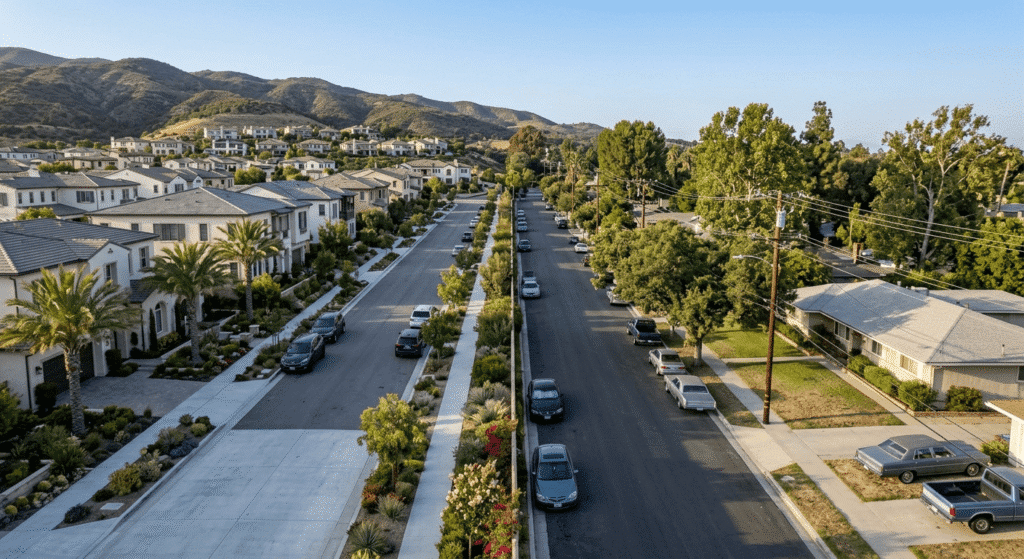
When you’re looking at homes in Porter Ranch, one street can make a surprisingly big difference.
Rinaldi Street runs through an area where the homes, neighborhoods, lot sizes, community layouts, and even some of the costs associated with homeownership can vary significantly from one side to the other.
That is why understanding the area street by street can be just as important as looking at the home itself.
In this guide, we’re taking a closer look at Porter Ranch and the neighborhoods around Rinaldi Street, including what buyers may find north and south of the road, the differences between newer and established communities, and some of the trade-offs worth considering before making a purchase.
Is It Really Porter Ranch?
One of the first things buyers notice about this part of the San Fernando Valley is that the term “Porter Ranch” can be used pretty broadly.
The 91326 ZIP code covers a large area, and neighborhood names do not always line up perfectly with ZIP code boundaries or how the City of Los Angeles identifies individual communities.
For buyers, this means it is important to look beyond the ZIP code and understand the specific neighborhood and property.
A home that is marketed as being in Porter Ranch may have a very different setting and lifestyle from another home just a few streets away.
The Biggest Myth About Rinaldi Street
One common assumption is that everything north of Rinaldi is new construction while everything south is older.
That’s not necessarily the case.
North of Rinaldi, buyers can find a mix of newer construction, gated communities, and established neighborhoods that were developed decades ago. Some of these older communities offer larger homes, established landscaping, and mature neighborhoods alongside newer developments.
South of Rinaldi, buyers will find many of the classic San Fernando Valley neighborhoods associated with Northridge, including older single-story homes, mature trees, larger lots, and homes with architectural details that are difficult to find in newer construction.
The important takeaway is that Rinaldi does not create a simple new-versus-old dividing line.
What Buyers May Find North of Rinaldi
North of Rinaldi, the housing landscape includes newer master-planned and gated communities as well as established neighborhoods.
Newer communities can offer features that appeal to buyers looking for a more modern lifestyle, including updated floor plans, newer infrastructure, community amenities, and contemporary finishes.
Some homes also offer foothill or mountain views and access to nearby trails and open spaces.
However, newer does not automatically mean lower-cost.
Depending on the community, buyers may encounter HOA dues, additional community expenses, and other ownership costs that should be included when calculating the true monthly cost of the home.
Established Homes Can Offer Something Different
One reason some buyers look at established neighborhoods is the character that comes with an older home.
South of Rinaldi, many properties reflect the classic San Fernando Valley ranch-style home. You may see single-story layouts, mature landscaping, wide lots, long driveways, detached garages, brick details, traditional living spaces, and architectural features from the 1950s and 1960s.
These homes may not have the newest kitchens or bathrooms, but they can offer something newer construction sometimes cannot, including established trees, larger outdoor spaces, and a sense of history.
For buyers who are willing to make improvements over time, that can be an important consideration.
Larger Lots and Outdoor Space
Lot size is another factor that can change the buying experience.
Some established Northridge neighborhoods feature larger, flatter lots with mature landscaping and substantial outdoor areas.
These properties can provide room for entertaining, gardening, additions, or other potential uses, depending on the property and applicable regulations.
Some areas also have a history connected to the San Fernando Valley’s former equestrian and ranch-style lifestyle.
For buyers interested in adding an ADU or making other property changes, it is important to verify zoning, permits, and current regulations before assuming a particular use is allowed.
Utilities Can Also Be Different
Another difference buyers may notice between established and newer neighborhoods involves infrastructure.
Older neighborhoods may have overhead utility lines and utility infrastructure that reflects the age of the community.
Newer developments are more likely to have underground utilities as part of their original construction.
This is one of those details that may not seem important during a home tour, but it can become part of the overall neighborhood experience and maintenance considerations.
Wind, Fire Risk, and Insurance
Location matters when it comes to insurance as well.
Properties closer to the foothills and open-space areas can have different wildfire exposure and wind conditions than homes farther into established neighborhoods.
Insurance availability and premiums can vary based on the exact property, location, construction, coverage, and current insurance-market conditions.
That is why buyers should not wait until after they have fallen in love with a home to investigate insurance.
Getting an insurance quote early in the process can help you understand the actual cost of owning the property and identify potential issues before you are too far into the transaction.
Lifestyle Can Change From One Side to the Other
The differences aren’t just about the homes.
Location can affect how you spend your everyday life.
Some areas north of Rinaldi provide convenient access to foothill trails, newer parks, gated communities, and newer neighborhood amenities.
Established neighborhoods farther south can offer easier access to areas such as Cal State Northridge, Reseda Boulevard, major roads, and other long-established San Fernando Valley amenities.
Neither lifestyle is automatically better. They simply appeal to different buyers.
Someone looking for newer construction and a more planned community may have different priorities from someone who wants a larger established lot with mature trees and a classic Valley home.
Comparing the Two Areas
When comparing properties around Rinaldi Street, consider more than just the listing price.
North of Rinaldi may appeal to buyers looking for:
- Newer construction and modern floor plans
- Gated or master-planned communities
- Foothill and mountain settings
- Newer neighborhood infrastructure
- Access to newer community amenities
- Homes with contemporary finishes
Potential considerations can include HOA dues, community expenses, insurance costs, and the specific location of the property.
South of Rinaldi may appeal to buyers looking for:
- Established neighborhoods
- Classic San Fernando Valley architecture
- Single-story ranch-style homes
- Larger or flatter lots
- Mature trees and landscaping
- Potential renovation opportunities
- Established access to longtime Valley amenities
Older homes may also require more maintenance or updating, so buyers should carefully evaluate the property’s condition rather than assuming a lower purchase price means lower overall costs.
Look at the Complete Cost of Ownership
The purchase price is only one part of the equation.
When comparing two homes, look at the full monthly and annual picture.
That can include:
- Mortgage payment
- Property taxes
- HOA dues
- Homeowners insurance
- Utilities
- Maintenance
- Potential renovation costs
- Landscaping
- Community fees or other property-specific expenses
A home that appears less expensive at first may have different ongoing costs, while a more expensive home could require less immediate work.
The right comparison is the one that reflects your actual financial situation and lifestyle.
Think About the Home, Not Just the Neighborhood Name
One of the biggest lessons when shopping in Porter Ranch and Northridge is that the neighborhood name alone does not tell the whole story.
Two homes can be only minutes apart and have completely different:
- Lot sizes
- Construction dates
- HOA structures
- Utility setups
- Insurance considerations
- School assignments
- Renovation needs
- Community amenities
- Resale considerations
This is why buyers should evaluate the exact property rather than making assumptions based solely on the ZIP code or neighborhood label.
Watch the Video
Want to take a closer look at the differences between Porter Ranch north and south of Rinaldi Street?
Watch the video below as Scott Himmelstein breaks down the neighborhood, home styles, lot sizes, costs, lifestyle differences, and other factors buyers should consider before choosing a property.
The video offers a closer look at what makes this part of the San Fernando Valley so diverse and why understanding the area street by street can make a difference when you’re searching for a home.
The Bottom Line
Porter Ranch and the surrounding Northridge neighborhoods offer a wide range of housing options, and Rinaldi Street is a useful reference point for understanding some of those differences.
North of Rinaldi, buyers may find newer communities, foothill settings, gated neighborhoods, and modern construction mixed with established developments.
South of Rinaldi, buyers may find classic San Fernando Valley homes, mature landscaping, larger lots, and established neighborhoods with a different character.
There is no one-size-fits-all choice.
The best approach is to understand the specific property, neighborhood, ownership costs, insurance considerations, and lifestyle before making a decision.
When you’re looking at homes in Porter Ranch or Northridge, knowing the area beyond the listing description can help you make a more informed choice about where you want to live.
Work with Scott